 Livestock

The cow that usually stands quietly has started kicking during milking. You are worried about the bucket, your hands and what has changed for her.
A change in behaviour deserves a closer look
NDDB's cow comfort manual treats marked changes in behaviour as reasons to investigate health, handling and surroundings. It identifies changes in routine, personnel and insect nuisance among possible sources of agitation. That does not make every kick a diagnosis of disease, but it does make punishment the wrong starting point.
TNAU describes a hot, painful, swollen udder and abnormal milk as warning signs of mastitis. Look for these observations without putting yourself within reach of a kick. If the animal reacts when a particular area is approached, tell the vet exactly what you noticed rather than deciding the cause yourself.
Count the disruption, not an imagined saving
A spilled bucket is easy to notice. For your own farm record, also note interrupted milking, extra help needed and any injury. These are practical things to track, not a promise that buying a restraint will recover a particular amount of milk or income.
It can be frustrating when the same job suddenly takes longer. Give that frustration a useful job: write down when the kicking began and what changed around that time. A clear account is more useful to the person helping you than calling the cow difficult.
Make the next milking safer
- Pause if handling is unsafe. Move people out of kicking range and ask an experienced handler for help instead of crowding the animal.
- Observe the udder, teats, movement and milk from a safe position. Record swelling, visible injury, abnormal milk or reluctance to move for the vet.
- Review the milking routine. Tell the adviser about a new milker, unfamiliar equipment, noise, insects or a changed standing area.
- Ask the trained handler whether restraint is appropriate for this animal. Have fitting, release and supervision demonstrated before considering the job manageable.
- Record what happens at the next milking and pass the information to everyone handling her. Persistent kicking needs reassessment even if restraint makes milking possible.
Where the A2Z bar helps
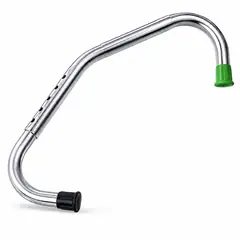
An A2Z anti-kick bar can assist trained restraint during handling. It cannot remove pain, diagnose an udder problem or guarantee that nobody will be injured. Its purpose should be agreed with the person responsible for safe handling.
Have that person check suitability and fit against the equipment instructions. Do not use greater pressure as a substitute for finding the cause, or leave a restrained animal unattended. If safe fitting is uncertain, stop and get help rather than improvise around a frightened animal.
When to call the vet
Call promptly for udder pain or swelling, abnormal milk, visible injury, difficulty walking or a sudden behaviour change that persists. Tell the vet about appetite and any other changes too. A tool that makes a job possible is not evidence that the animal is well.
A stronger farm begins with listening when an animal's ordinary routine changes.
Public sources: NDDB: cow comfort · TNAU: udder health