 Livestock

You keep putting feed out, yet the piglets do not seem to be growing as expected. Before buying another bag, watch which piglets can reach the feed and what they actually eat.
A full feeder is only the beginning
TNAU describes creep feeding as giving young piglets access to concentrate feed in a separate area away from their mother. Its feeding guidance also distinguishes nutritional requirements at different growth stages. The useful lesson is to match the ration and feeding arrangement to the piglets, not assume that adult feed suits every age.
Ask a livestock nutrition adviser to review the feed being offered and how it fits the litter's stage. A feeder supplies access; it cannot correct an unsuitable formulation. Do not turn a growth figure from a general table into a promised result for your animals.
Make your own growth record
Keep the dates and results of consistent growth checks, along with feed offered, leftovers and changes to the ration. Ask the adviser how to measure progress appropriately. This gives the discussion a firmer basis than comparing today's litter with a remembered picture of the previous one.
For the farm account, record extra feed and time spent investigating slow progress. Do not assume an exact sale delay or saving before you have the facts. When the work is already being done, finding the missing part of the feeding routine matters more than adding another product without a plan.
Watch a feeding, then make changes
- Observe the litter while feed is available. Note which piglets approach and eat, which hang back and whether the sow can reach feed intended for the piglets.
- Ask the adviser to check the ration against the piglets' stage and health. Bring the feed label and details of any ingredients mixed on the farm.
- Provide the separate feeding arrangement recommended for creep feed. Check that the piglets can reach the feeder comfortably and that it remains stable during use.
- Keep the feeder clean and offer feed according to the agreed plan. Record leftovers and any change in appetite rather than simply topping up over old material.
- Review growth and feeding records with the adviser. Ask about water access and any other care concerns, and investigate animals that remain behind instead of continually increasing feed by guesswork.
Where the A2Z feeder helps
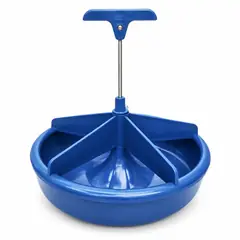
An A2Z plastic piglet feeder provides a place to offer suitable feed in the piglets' feeding area. It supports access and a clearer feeding routine. It does not supply nutrients by itself, prevent disease or guarantee faster growth.
Check the fit of the feeder within the pen and observe its use before calling the arrangement successful. A clean feeder that the smallest piglet cannot reach is a prompt to reassess the setup. Follow the feeding professional's advice on the ration instead of using the container's size as a portion rule.
When to call the vet
Seek veterinary advice for poor appetite, diarrhoea, weakness, breathing difficulty or slow growth that persists after the feeding arrangement is reviewed. Nutrition is only part of the investigation. Do not assume that an animal failing to thrive simply needs a larger serving.
Strong farms grow through attention to the animal behind the feed bill.
Public sources: TNAU: pig feeding and creep feed